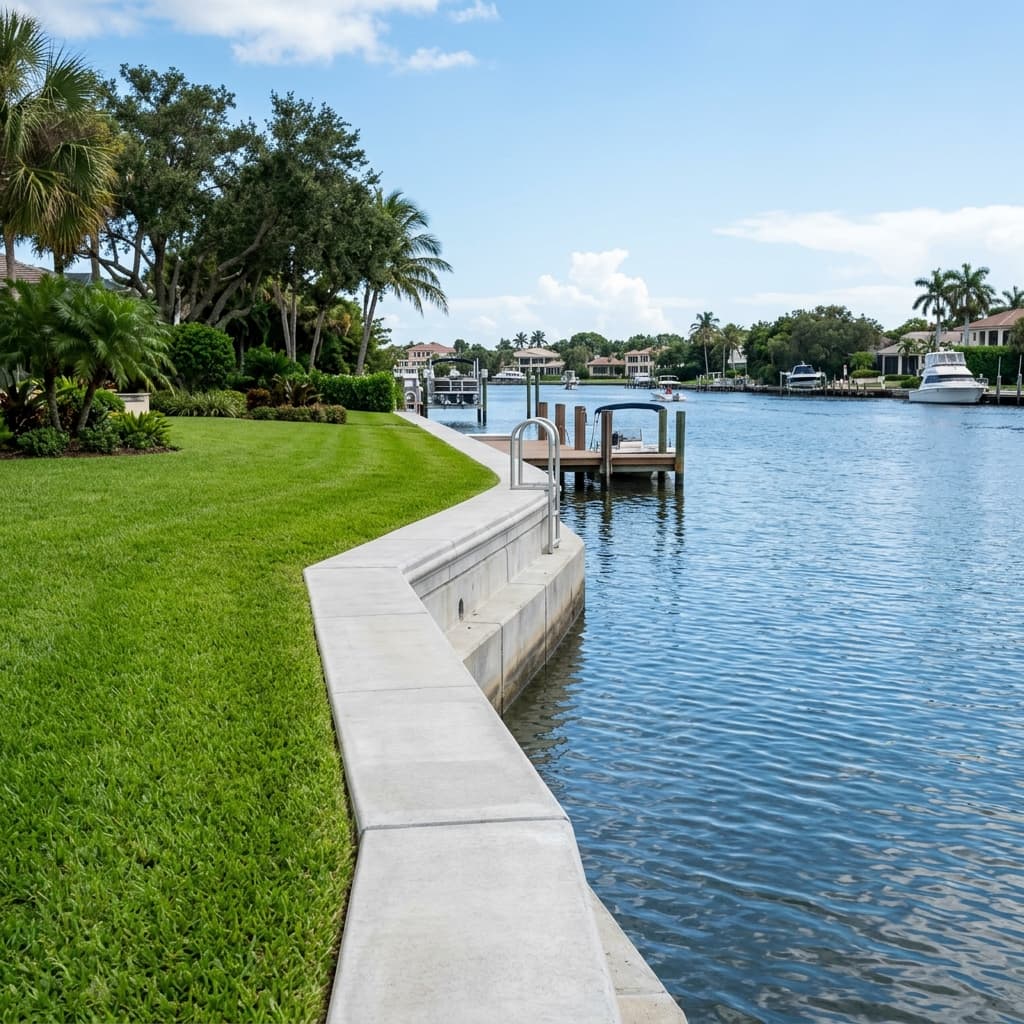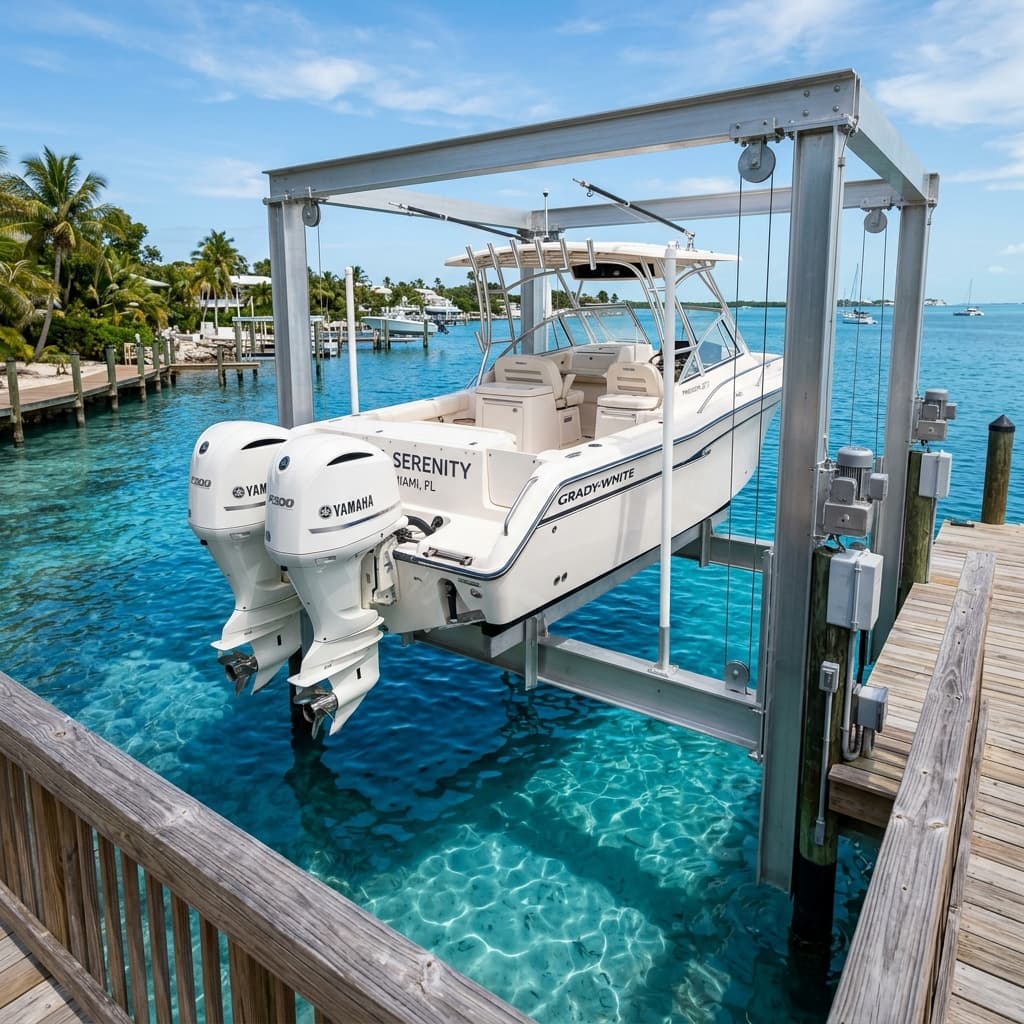
Choose an elevator lift if you have a sturdy seawall or fixed dock to mount it on and want the boat raised beside the dock for easy boarding. Choose a cradle lift (also called a four-post or piling-mounted lift) if you need the lift to stand on its own pilings in open water, or if your wall or dock can't support a mounted lift. Water depth, the condition of your structure, and how you board the boat are usually the deciding factors.
Here is how the two styles compare and what to ask a lift installer before you buy.
How each lift works
Elevator lifts
An elevator lift attaches to a vertical structure, usually a seawall or a fixed dock. A carriage with bunks or arms travels up and down rails, lifting the boat straight up beside the structure. Because the boat sits right next to the wall, boarding is often as simple as stepping across.
Cradle lifts
A cradle lift uses a cradle of beams and bunks suspended between pilings, typically four of them. Cables and a drive system raise the cradle straight up. The boat sits in its own slip, often alongside or at the end of a dock, rather than against a wall.
Key factors to compare
Your existing structure
This is often the first question an installer will ask.
- Elevator lifts depend on the strength of the wall or dock they mount to. An older or damaged seawall may not be a safe anchor point.
- Cradle lifts carry the load on their own pilings, so they are less dependent on the condition of your seawall.
If your seawall needs repair, address it before mounting anything to it.
Water depth and tides
Both lift types need enough water to float the boat on and off. In tidal areas, consider the lowest water you will regularly see, not just the average. Cradle lifts can sometimes be positioned farther out where water is deeper, while elevator lifts are tied to the location of your wall.
Boat size and type
Lift capacity must match the fully loaded weight of your boat, including fuel, water, engines, and gear, plus a sensible safety margin. Hull shape matters too: pontoons, catamarans, and V-hulls may each need different bunk configurations. Share your boat's specifications with the installer rather than estimating.
Boarding and convenience
Elevator lifts usually make it easier to step aboard from the wall. Cradle lifts may require a walkway or finger dock alongside the slip. Think about who uses the boat and how often.
Permitting and placement
Installing new pilings for a cradle lift can involve a different permitting process than mounting an elevator lift to an existing wall. Rules vary by location, so ask your installer what will be required for your property.
Maintenance considerations
Every lift needs routine care, regardless of style.
- Cables and pulleys: inspect for fraying, kinks, or corrosion, and replace them on the manufacturer's recommended schedule.
- Motors and drives: keep covers on, check for unusual noise, and follow the manufacturer's service guidance.
- Bunks: worn bunk carpet can scratch your hull.
- Structure: check mounting points, pilings, and hardware for loosening or corrosion.
In saltwater, corrosion is a constant concern. Ask about materials and coatings designed for marine environments.
Quick comparison
| Factor | Elevator lift | Cradle lift |
|---|---|---|
| Mounts to | Seawall or fixed dock | Its own pilings |
| Depends on wall condition | Yes | Less so |
| Boarding | Usually step across from wall | Often needs a walkway |
| Placement flexibility | Tied to wall location | Can be placed in open water |
Questions to ask an installer
- Is my seawall or dock strong enough for an elevator lift?
- What capacity do you recommend for my boat, fully loaded?
- How will tides or seasonal water levels affect operation?
- What permits will this installation need?
- What maintenance do you recommend, and do you offer service plans?
- What warranty covers the lift and the installation?
The bottom line
There is no single best boat lift, only the best fit for your structure, water, and boat. Elevator lifts work well with sound seawalls and offer easy boarding, while cradle lifts offer more placement flexibility and don't rely on your wall. An experienced installer can assess your site and recommend the right option.
Find a boat lift installer in the Waterfront Repairs Directory.