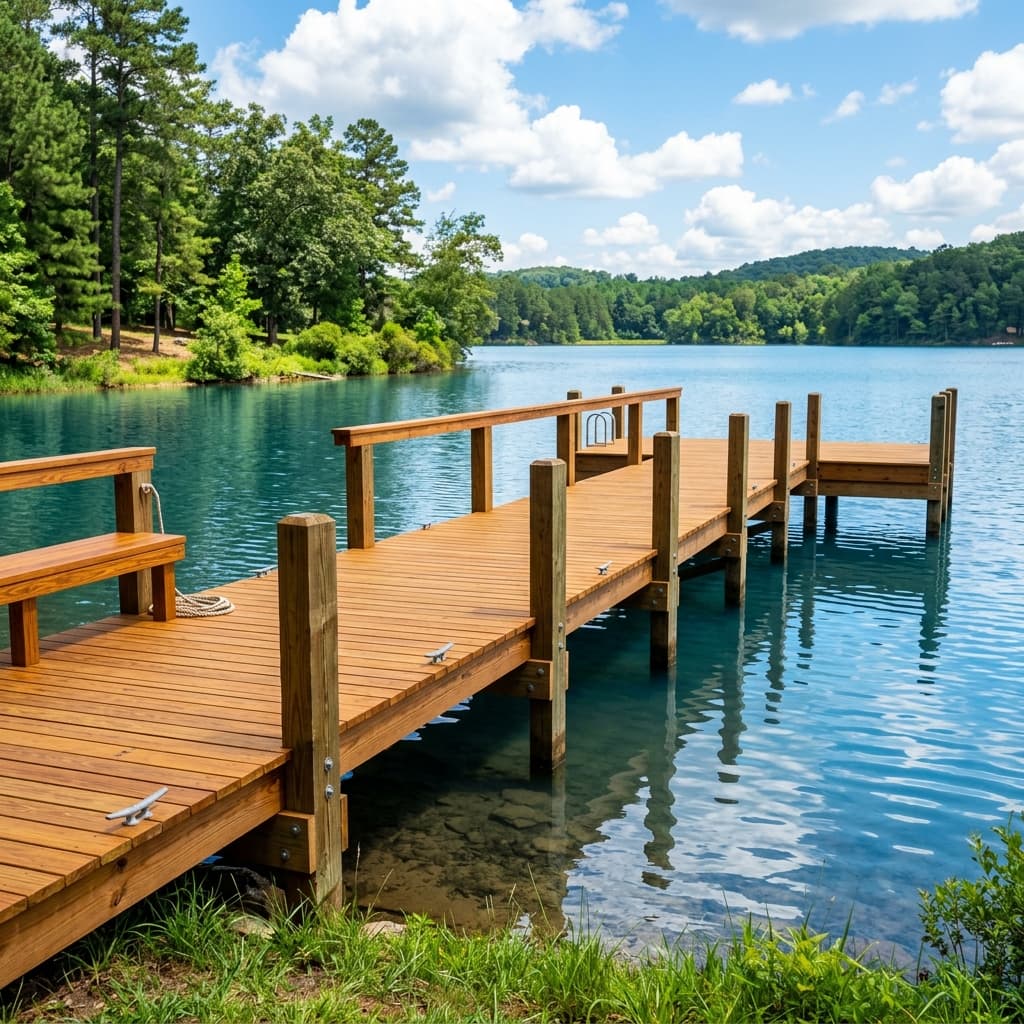
For most homeowners, the choice comes down to upfront cost versus long-term maintenance. Pressure-treated wood is the traditional, budget-friendly option but needs regular sealing and board replacement. Composite and PVC decking cost more upfront but resist rot and splintering with less upkeep. Aluminum and grated decking are very durable and let light through to the water below, which some jurisdictions encourage. The right material depends on your climate, water type, how you use the dock, and local requirements.
Here is how the most common options compare.
Pressure-treated wood
Pressure-treated lumber is the most familiar dock decking material.
Pros
- Usually the lowest upfront material cost
- Widely available and easy for contractors to work with
- Classic look that many owners prefer
Cons
- Needs periodic cleaning and sealing
- Can crack, warp, and splinter over time
- Boards may need replacement more often than synthetic options
Good fit for: owners who want a traditional look, are comfortable with routine maintenance, or are working with a tighter budget.
Tropical hardwoods
Dense hardwoods are sometimes used for high-end docks.
Pros
- Naturally dense and durable
- Rich appearance that can weather to a silver gray
Cons
- Higher material cost
- Heavy and harder to cut and fasten
- Sourcing and sustainability vary, so ask your supplier about certification
Composite decking
Composite boards blend wood fibers and plastic, often with a protective outer layer (cap).
Pros
- Resists rot, insects, and splintering
- Less maintenance than wood, usually just cleaning
- Wide range of colors and textures
Cons
- Higher upfront cost than pressure-treated wood
- Some products get hot in direct sun; lighter colors help
- Requires proper framing and spacing per the manufacturer
Not all composites are marine-rated
Ask whether a product is approved for docks and water exposure. Some decking designed for backyard decks isn't intended for constant moisture.
PVC decking
Fully synthetic PVC boards contain no wood fibers.
Pros
- Highly resistant to moisture and mold
- Lightweight and low maintenance
Cons
- Typically priced at the upper end
- Can expand and contract with temperature, so installation details matter
Aluminum and grated decking
Aluminum framing with aluminum or grated (light-penetrating) decking is common on floating and seasonal docks.
Pros
- Very durable and corrosion-resistant when properly specified
- Lightweight, helpful for removable docks
- Grated surfaces let sunlight reach the water, which can benefit aquatic plants
Cons
- Different look and feel than wood
- Solid aluminum can get hot in the sun
- Higher upfront cost for some systems
Light-penetrating decking and permits
In some areas, regulators prefer or require decking that lets light reach the water below. Ask your contractor whether this applies to your project.
Comfort and safety underfoot
How a dock feels matters as much as how long it lasts, especially if kids and pets use it barefoot.
Heat
Darker boards and solid metal surfaces absorb more heat in direct sun. If your dock gets afternoon sun, ask for sample boards and leave them outside for a day before deciding.
Traction
Wet decking can be slippery. Look for textured or embossed surfaces, and ask how each product performs when wet or when algae builds up. Boards around ladders and swim platforms deserve extra attention.
Splinters and fasteners
Wood can splinter as it weathers, while synthetic boards generally don't. Hidden fastener systems can also reduce stubbed toes and snagged lines.
Questions to ask before you choose
- Is this product rated for marine use and for my water type (fresh or salt)?
- How hot does the surface get in direct sun?
- How slippery is it when wet?
- What maintenance does the manufacturer recommend?
- What warranty applies, and does it cover dock installations?
- Does my existing framing support this decking, or does it need upgrades?
Don't forget the framing
Decking sits on a frame of joists, stringers, and pilings. Upgrading to premium decking on a failing frame is a poor investment. Have a contractor inspect the substructure before you replace boards.
The bottom line
There is no universally best dock decking. Wood offers a classic look at a lower upfront cost, composite and PVC trade higher prices for lower maintenance, and aluminum or grated systems offer durability and light penetration. Match the material to your climate, water, budget, and appetite for maintenance.
Find marine decking pros in your area.