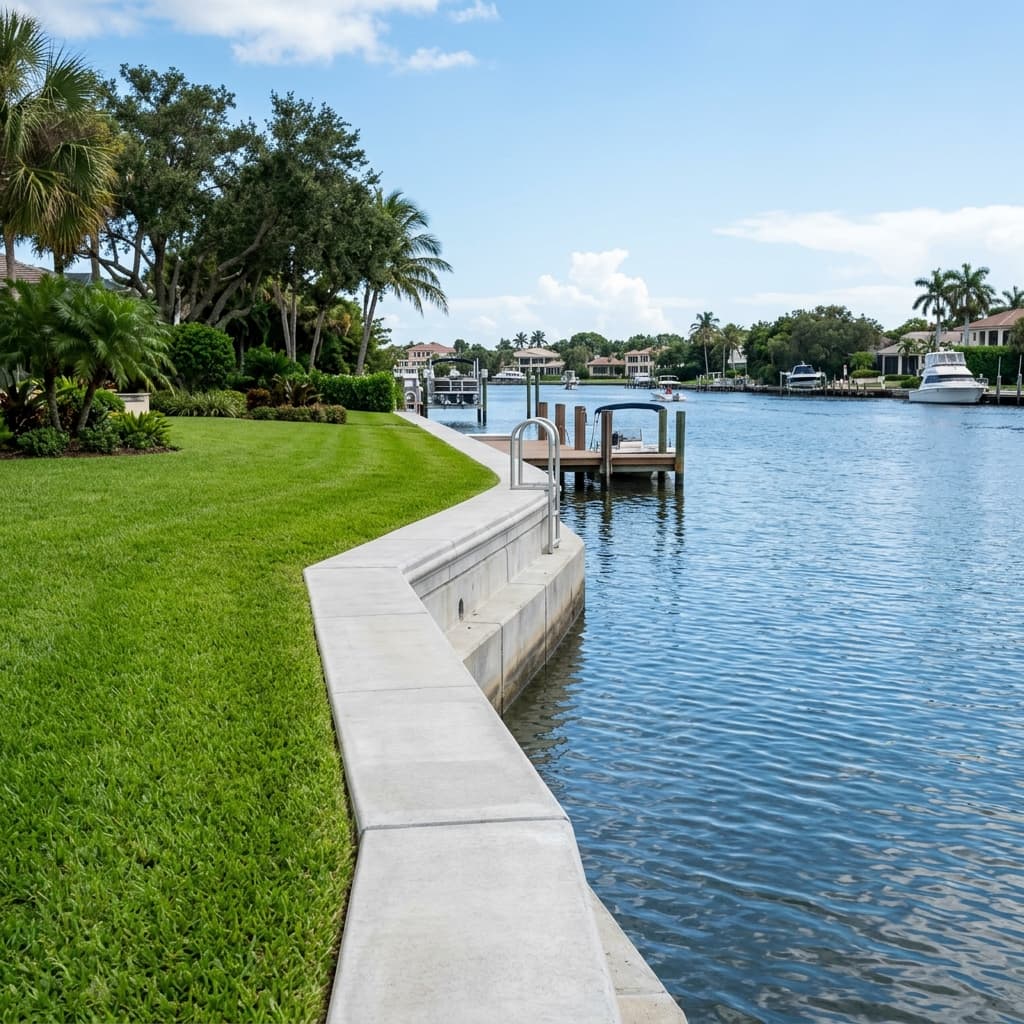
To hire a marine contractor with confidence, verify their license and insurance, get at least a few detailed written estimates, check recent references and completed projects, confirm who handles permits, and sign a clear written contract before any work begins. Marine construction is specialized, so a general contractor who builds decks on land isn't automatically qualified to build a dock or seawall.
Use this checklist to compare contractors and avoid common mistakes.
Step 1: Find contractors who specialize in your project
Marine contractors often focus on specific work: docks and piers, seawalls and bulkheads, boat lifts, dredging, or a combination. Start with companies that regularly do the type of project you need, in your type of water.
Sources to consider:
- Directories focused on marine contractors
- Neighbors with similar projects
- Marinas and boat dealers
- Your HOA or local waterfront association
Step 2: Verify license and insurance
This is the most important step.
License
Licensing requirements for marine work vary by state and locality. Ask each contractor which licenses they hold, then verify them with the issuing agency. Many states offer online license lookups.
Insurance
Ask for certificates of insurance showing general liability and workers' compensation coverage. Some marine work may call for additional coverage. Confirm that the policy is current, and consider asking to be added as a certificate holder.
If a contractor can't or won't provide proof of license and insurance, move on.
Step 3: Get detailed written estimates
Compare at least a few estimates for the same scope of work. A good estimate includes:
- A clear description of the work and materials
- Brand, grade, and specifications for major materials
- Who is responsible for permits, and whether permit fees are included
- How debris and old materials will be removed
- An estimated start date and timeline
- Payment schedule
- Warranty terms for labor and materials
Be wary of outliers
An estimate far below the others may leave out important work or use lower-grade materials. Ask each contractor to explain what is and isn't included.
Step 4: Check references and past work
Ask for references from recent projects similar to yours, and follow up. Questions to ask references:
- Was the project finished on time and on budget?
- How did the contractor communicate during the job?
- How were unexpected problems handled?
- Would you hire them again?
If possible, look at a completed project in person.
Step 5: Clarify permits and inspections
Most significant waterfront work requires permits, and requirements vary by location. Ask:
- Which permits do you expect this project to need?
- Will you submit the applications?
- How long do approvals usually take here?
- Who schedules inspections?
Be cautious of anyone who suggests skipping permits.
Step 6: Review the contract carefully
Before work starts, get a written contract that matches the estimate and includes:
- Scope of work and materials
- Price and payment schedule tied to milestones
- Start and completion dates, and how delays are handled
- Change-order process for any additional work
- Warranty details
- Cleanup and site restoration responsibilities
Avoid paying the full amount upfront. A reasonable deposit followed by milestone payments is common.
Red flags to watch for
- Pressure to sign immediately
- Requests for full payment upfront or cash-only deals
- No physical business address or verifiable references
- Vague estimates without itemized materials
- Unwillingness to pull permits
Questions to ask every contractor
- How long have you been doing marine construction in this area?
- Are you licensed and insured for this work? Can I see proof?
- Who will supervise the job day to day?
- Do you use subcontractors? Are they insured?
- What warranty do you provide?
- How will you protect my property and the water during construction?
The bottom line
Hiring the right marine contractor comes down to due diligence: verify credentials, compare detailed estimates, talk to references, and get everything in writing. Taking a little extra time up front protects your property and your investment.
Start your search in the Waterfront Repairs Directory, where every listing is reviewed before it goes live.